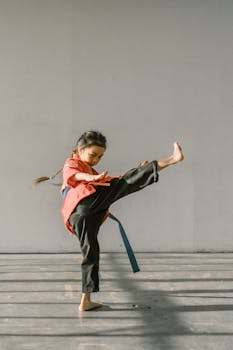
Image by RDNE Stock project on Pexels
Karate uniforms have been an integral part of the martial art for centuries, serving as a symbol of discipline, respect, and tradition. From their humble beginnings to their current status as a staple of karate training, these garments have undergone significant transformations, reflecting changes in society, culture, and technology. In this comprehensive article, we will delve into the history of karate uniforms, exploring their origins, development, and evolution over time.
The Early Days: Traditional Garb and the Roots of Karate Uniforms
Karate originated in Okinawa, Japan, in the early 20th century, with a focus on martial arts such as Shotokan, Shito-ryu, and Goju-ryu. Initially, karate uniforms were simple, practical garments made from cotton or linen, designed for physical training and competition. These early uniforms typically consisted of a loincloth (called a "sashigoto"), a sleeveless jacket (or "karate gi"), and a pair of pants.
The sashigoto was a long, narrow strip worn around the waist, often made from silk or cotton, to provide modesty and support. The karate gi itself was a simple, sleeveless jacket with a wide belt that secured it in place. The pants were usually loose-fitting, allowing for ease of movement.
The Rise of Modern Karate Uniforms
As karate evolved into a formal martial art discipline, the uniforms underwent significant changes. In the 1930s and 1940s, modern karate uniforms began to take shape, reflecting the influence of Western dress codes. This period saw the introduction of more formal attire, including coats, ties, and high-top hats.
One of the most notable developments in modern karate uniform design was the creation of the "karate gi" by Shotokan karate instructor, Gichin Funakoshi. In 1936, Funakoshi designed a new type of martial arts jacket that combined elements from various traditional garments with modern practical considerations. This innovative design became the standard for Shotokan and other styles of karate.
The Role of Uniforms in Martial Arts Training
Karate uniforms play an essential role in martial arts training, serving as a visual representation of discipline, respect, and tradition. The uniforms also provide a sense of unity among practitioners, fostering a shared identity and sense of belonging within the karate community.
During training sessions, uniformed students often gather together to demonstrate techniques, share knowledge, and reinforce their commitment to the martial art. The uniforms serve as a visual reminder of their dedication and responsibility to the craft.
The Impact of Cultural Exchange on Karate Uniforms
Karate uniforms have also been influenced by cultural exchange with other martial arts traditions. In recent years, karate practitioners from diverse backgrounds have incorporated elements of other styles into their uniform designs, reflecting the increasing global nature of karate training.
For example, some modern karate instructors have adopted traditional attire from indigenous cultures, such as Native American or African warrior garb, incorporating them into their uniform designs. This blending of cultural influences reflects the evolving nature of martial arts and the desire for greater diversity and inclusivity within the community.
The Role of Uniforms in Competition
Karate uniforms are not only an integral part of training but also play a crucial role in competition. The uniforms serve as a visual representation of the practitioner's rank, style, and affiliation, influencing the judges' perceptions of their abilities.
During competitions, uniformed students often wear their most formal attire, demonstrating their commitment to excellence and professionalism. This emphasis on uniformity helps to maintain the integrity of the martial art and ensures that practitioners adhere to established standards and codes of conduct.
The Evolution of Karate Uniforms in Modern Times
In recent years, karate uniforms have undergone significant changes, driven by advances in technology, shifting societal values, and growing demands for innovation. The development of new materials, designs, and manufacturing techniques has enabled the creation of more comfortable, practical, and stylish uniform garments.
One notable example is the introduction of moisture-wicking fabrics, which have improved the performance and comfort of karate uniforms during physical training. Additionally, advances in digital printing technology have allowed for a wide range of colors, patterns, and designs to be incorporated into uniform production, further enhancing their aesthetic appeal.
Expert Insights: The Future of Karate Uniforms
The evolution of karate uniforms will undoubtedly continue, driven by the needs and preferences of practitioners. As martial arts training continues to adapt to changing societal values and technological advancements, uniform designers must stay ahead of the curve, incorporating innovative materials, designs, and technologies into their creations.
One expert in the field notes: "In today's world, karate uniforms need to be more than just a symbol of discipline; they should also reflect our commitment to sustainability, adaptability, and innovation. As we move forward, it will be essential to prioritize environmental responsibility, incorporating eco-friendly materials and production methods into uniform design."
Conclusion
Karate uniforms have come a long way since their early days as simple, practical garments for physical training and competition. From traditional garb to modern designs, the uniforms have undergone significant transformations, reflecting changes in society, culture, and technology.
As we continue to evolve and adapt to new challenges, it is essential to appreciate the rich history and cultural significance of karate uniforms. By exploring their origins, development, and evolution over time, we can gain a deeper understanding of the martial art's core values, principles, and traditions.
For those interested in further exploration of karate uniforms, myKarateStore karate uniforms offers an extensive range of traditional and modern garments, including authentic Shotokan and other styles. Whether you're a seasoned practitioner or a newcomer to the world of karate, our store is your trusted source for all your uniform needs.