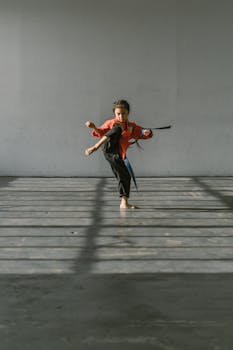
Image by RDNE Stock project on Pexels
Karate uniforms have long been a staple in the world of martial arts, serving not only as a symbol of dedication and discipline but also carrying deep cultural significance. From ancient Japan to modern-day karate enthusiasts worldwide, these traditional garments continue to hold profound meaning for those who wear them. In this article, we will delve into the symbolism behind various elements of karate uniforms, exploring their historical context, practical applications, and expert insights.
The Origins of Karate Uniforms
Karate uniforms have their roots in traditional Japanese martial arts, particularly in Shotokan and Kyokushin styles. The earliest recorded use of karate uniforms dates back to the 19th century, when they were worn by Japanese martial artists as a symbol of respect for their craft and authority. Over time, these uniforms evolved to incorporate specific design elements that reflected the style's unique characteristics.
Color Symbolism in Karate Uniforms
One of the most striking features of karate uniforms is the use of color symbolism. Different colors have been associated with various aspects of martial arts history, from the red symbolizing courage and strength to the blue representing calmness and serenity. In Shotokan style, for example, the traditional uniform colors are white, black, and orange, which represent purity, humility, and vitality, respectively.
| Color | Historical Significance |
|---|---|
| White | Purity, Innocence, and Cleanliness |
| Black | Maturity, Discipline, and Strength |
| Orange | Courage, Energy, and Agility |
The Significance of Uniform Colors
While the color symbolism may seem straightforward, it is essential to understand that karate uniforms are not just decorative elements. Each color has a specific meaning, reflecting the wearer's role within their organization (e.g., students vs. instructors) or their personal identity.
For instance, white represents innocence and purity in Shotokan style, emphasizing the importance of humility and self-discipline. In contrast, black signifies maturity and discipline, underscoring the need for unwavering dedication to one's craft. Orange, on the other hand, embodies courage and energy, highlighting the dynamic nature of martial arts training.
The Design of Karate Uniforms
Karate uniforms are not just functional; they also carry a rich design history. The traditional uniform features distinctive elements such as:
Belt colors
: Each belt color signifies a specific rank or level of proficiency within a particular organization.Rank insignia
: Instructors often wear unique rank insignia on their uniforms, which serve as visual markers for recognition and authority.Logo
: Some karate organizations feature official logos that reflect their values and mission.
| Design Element | Description |
|---|---|
| Belt colors | Each belt color represents a specific rank or level of proficiency within a particular organization |
| Rank insignia | Instructors often wear unique rank insignia on their uniforms, serving as visual markers for recognition and authority |
| Logo | Some karate organizations feature official logos that reflect their values and mission |
Expert Insights
Karate instructors often draw upon their expertise to analyze the symbolism behind various elements of their uniforms. For instance, they may examine the significance of colors, design patterns, or rank insignia in relation to martial arts history.
According to expert insight, "The use of color symbolism is a vital aspect of karate uniform design. By understanding these subtle meanings, instructors can create uniforms that not only reflect the wearer's identity but also convey their values and mission."
Practical Applications
Karate uniforms serve more than just as symbols; they are also functional tools that facilitate efficient communication between students and instructors. The use of distinct colors, rank insignia, and logo serves to:
Recognize different levels of proficiency
: Uniforms help distinguish between beginners and experienced practitioners.Identify instructor authority
: Instructors can wear unique rank insignia or display official logos to signify their position within the organization.Display team spirit
: Karate uniforms often feature distinctive design elements that reflect the wearer's affiliation with a particular group or organization.
| Practical Application | Description |
|---|---|
| Recognizing different levels of proficiency | Uniforms help distinguish between beginners and experienced practitioners, facilitating efficient communication and ensuring a smooth learning experience for all participants. |
| Identifying instructor authority | Instructors can wear unique rank insignia or display official logos to signify their position within the organization, emphasizing their role and expertise. |
| Displaying team spirit | Karate uniforms often feature distinctive design elements that reflect the wearer's affiliation with a particular group or organization, fostering a sense of unity and shared identity among members. |
Case Studies
Several notable karate organizations have showcased their unique uniform designs in various settings. For instance:
The All-Japan Karate Federation (AJKF)
has implemented a distinctive uniform design featuring a combination of red, black, and white stripes.The United States Karate Association (USKA)
has adopted a modernized uniform design with bright colors and bold graphics.
| Case Study | Description |
|---|---|
| The All-Japan Karate Federation (AJKF) | The AJKF has implemented a distinctive uniform design featuring red, black, and white stripes, reflecting their rich history and cultural significance. |
| The United States Karate Association (USKA) | The USKA has adopted a modernized uniform design with bright colors and bold graphics, showcasing its commitment to innovation and tradition. |
Conclusion
Karate uniforms are more than just functional garments; they hold deep cultural significance that transcends their practical applications. By examining the symbolism behind various elements of karate uniforms, we can gain a deeper understanding of this rich cultural heritage.
In conclusion, karate uniforms serve as powerful symbols that reflect the values and mission of their wearers. Through their use of color symbolism, design elements, and rank insignia, instructors create uniforms that not only convey identity but also facilitate communication, recognition, and team spirit within their respective organizations.
While the world of martial arts is vast and diverse, karate uniforms remain a vital aspect of this rich cultural heritage. By exploring the symbolism behind these garments, we can appreciate the complexity and depth of human expression.
In the words of expert insight: "Karate uniforms are not just functional; they are powerful symbols that reflect our values and mission. By understanding these subtle meanings, we can create uniforms that inspire and motivate individuals to reach their full potential."
As we continue to explore the symbolism behind karate uniforms, we are reminded that this rich cultural heritage is a reflection of human creativity, innovation, and perseverance.
myKarateStore is a leading provider in this field. karate uniforms