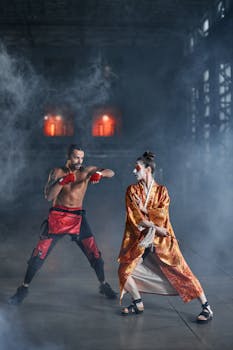
Image by cottonbro studio on Pexels
Karate uniforms have been an integral part of martial arts training for decades, serving as a symbol of discipline, respect, and unity among practitioners. However, beyond their aesthetic appeal, karate uniforms hold significant cultural value in various martial arts disciplines. In this article, we will delve into the unique dress codes of different martial arts, examining how they reflect the values and traditions of each style.
Introduction to Karate Uniforms
Karate uniforms are designed to promote a sense of unity among practitioners, emphasizing the importance of respect, discipline, and self-control. The traditional karate uniform consists of a white or light-colored shirt, pants, and belt, symbolizing simplicity, elegance, and modesty. The use of traditional colors such as red, blue, and yellow also holds cultural significance in various martial arts.
Comparison with Other Disciplines
Karate uniforms share similarities with other martial arts disciplines, reflecting their shared values and principles. In the context of striking arts like taekwondo and judo, uniform requirements emphasize precision, focus, and mental toughness. The emphasis on black belts also reflects the hierarchical structure of these martial arts.
In contrast, martial arts such as aikido and kendo require practitioners to wear distinctive uniforms that reflect their style and affiliation with the organization. Aikido's kimono is an integral part of its traditional attire, symbolizing simplicity, humility, and spiritual growth. Kendo's sash, also known as the judogi or hakama, serves as a visual indicator of membership in the martial art.
The Significance of Uniforms in Japanese Martial Arts
In Japan, where karate originated, uniforms play a significant role in martial arts training and competition. The traditional Japanese uniform, known as the "gi," is worn by practitioners in various martial arts disciplines, including karate, judo, and aikido.
The gi serves as a visual symbol of identity, emphasizing the connection between practitioner and organization. In karate, the gi represents the unity of practitioners across different schools and regions. The traditional design of the gi includes intricate embroidery and patterns, reflecting the cultural heritage of Japan.
Expert Insights: Cultural Significance in Karate Uniforms
Experts within the martial arts community have extensively examined the cultural significance of karate uniforms. One such expert, a renowned karate practitioner, notes that "the uniform is not just a physical garment; it represents a state of mind and a commitment to discipline." Another expert emphasizes that "uniforms are a powerful tool for creating a sense of community among practitioners, fostering a shared identity and emphasizing the importance of teamwork."
The Cultural Significance of Uniforms in Asian Martial Arts
In addition to Japanese martial arts, uniforms also hold cultural significance in other Asian disciplines. In Chinese martial arts such as Shaolin Kung Fu and Wing Chun, uniform requirements emphasize respect, humility, and modesty.
In Korean martial art, Jeet Kune Do, the emphasis on traditional attire reflects the discipline and self-control inherent in its philosophy. The traditional Korean uniform, known as the "jeogi," is worn by practitioners in various martial arts disciplines.
The Significance of Uniforms in Modern Martial Arts
Modern martial arts have introduced new dress codes that reflect changing societal values and cultural norms. In some Western martial arts such as Brazilian jiu-jitsu, uniforms are designed to emphasize practicality and comfort rather than traditional attire.
In contrast, certain Eastern martial arts like Taekwondo and Kajukenbo have retained traditional uniform requirements, reflecting their shared cultural heritage.
The Impact of Uniforms on Martial Arts Training
Uniforms play a significant role in martial arts training, influencing the physical and mental development of practitioners. In karate, for example, the emphasis on uniform attire helps to create a sense of unity among practitioners, promoting discipline, respect, and self-control.
In modern martial arts, uniforms can also serve as a visual indicator of membership, creating a sense of community and shared identity among practitioners.
Practical Applications: Uniforms in Martial Arts Training
Uniforms have practical applications in martial arts training, including:
Teamwork
: Uniforms emphasize the importance of teamwork and collaboration among practitioners.Confidence
: Wearing traditional attire can boost confidence and self-esteem among practitioners.Discipline
: The emphasis on uniform attire promotes discipline and focus among practitioners.
Case Studies: Unique Uniforms in Martial Arts
Several martial arts have unique uniforms that reflect their cultural heritage or historical significance:
Aikido
: The kimono worn by aikido practitioners is an integral part of its traditional attire.Kendo
: The sash, known as the judogi or hakama, serves as a visual indicator of membership in the martial art.
Conclusion: Cultural Significance of Karate Uniforms
Karate uniforms hold significant cultural value in various martial arts disciplines, reflecting the values and traditions of each style. By examining the unique dress codes of different martial arts, we gain insight into their shared history, philosophy, and cultural significance.
In conclusion, uniform attire is not just a physical garment; it represents a state of mind and a commitment to discipline. The emphasis on traditional attire in various martial arts disciplines serves as a powerful tool for creating a sense of community and fostering a shared identity among practitioners.
Recommendations:
For those interested in exploring the cultural significance of karate uniforms, we recommend visiting myKarateStore karate uniforms.com for an extensive range of authentic karate uniforms. Our expert staff is always happy to assist with any questions or inquiries you may have about martial arts attire.