Karate Uniforms as a Representation of Honor and Bravery: Exploring the Symbolism behind Traditional Patterns
The art of karate is not just about physical movements and techniques; it also involves discipline, self-control, and mental toughness. Among the various aspects that define karate, one aspect stands out - its uniforms. Karate uniforms have been an integral part of the martial art for centuries, serving as a visual representation of the practitioner's commitment to the art, its principles, and its values. In this article, we will delve into the world of karate uniforms, exploring their history, symbolism, and significance behind traditional patterns.
The Origins of Karate Uniforms
Karate uniforms have their roots in ancient Japanese martial arts, particularly in the traditions of jujutsu and kendo. The concept of wearing uniforms dates back to the 17th century, when Japanese samurai wore traditional armor and clothing for ceremonial purposes. However, it wasn't until the early 20th century that karate uniforms began to take shape as we know them today.
The most significant influence on modern karate uniforms was the work of George H.W. Kaiser, an American businessman who introduced Western martial arts training to Japan in the 1920s. Kaiser saw the potential for karate to be a highly disciplined and physically demanding sport, and he designed specific uniforms to promote this aspect. The first karate uniform, called "karate gi," was born.
The Karate Gi: A Symbol of Honor and Bravery
The karate gi is perhaps the most iconic and recognizable part of a karate practitioner's attire. This traditional uniform consists of:
- Kimono: The kimono is the traditional Japanese garment worn by both men and women.
- Pants (Kusazuri): The pants are usually worn with a belt, which helps to define the boundary between the trousers and the gi.
- Socks (Himawashi): Traditional socks, known as himawashi, were often worn with the gi but have since become less common in modern karate.
The kimono, or hakama, is an essential part of the karate gi. It serves several purposes:
- To cover the lower body
- To create a sense of unity and cohesion among practitioners
- To symbolize the practitioner's connection to their ancestors and cultural heritage
The Pants: A Symbol of Discipline and Physicality
The pants, or kusazuri, are an integral part of the karate gi. They provide protection for the lower body and serve as a visual reminder of the practitioner's commitment to physical discipline.
- To protect the legs from injury
- To create a sense of professionalism and authority among practitioners
- To reflect the practitioner's dedication to their craft
The Socks: A Symbol of Tradition and Cultural Identity
Traditional socks, or himawashi, have been an integral part of karate uniforms for centuries. They serve several purposes:
- To add an extra layer of protection for the feet
- To create a sense of cultural identity among practitioners
- To reflect the practitioner's connection to their heritage and traditions
The Karate Uniforms: A Representation of Honor and Bravery
Karate uniforms are more than just a practical garment; they represent a significant aspect of karate culture. The uniform serves as a visual representation of the practitioner's commitment to the art, its principles, and its values.
- To promote discipline and self-control
- To create a sense of unity and cohesion among practitioners
- To reflect the practitioner's dedication to their craft
The Karate Uniforms: A Symbolic Representation of Honor and Bravery
Karate uniforms are not just practical garments; they also serve as a symbolic representation of honor and bravery. The uniform serves as a visual reminder of the practitioner's commitment to their craft, and it has become an integral part of karate culture.
- To promote discipline and self-control
- To create a sense of unity and cohesion among practitioners
- To reflect the practitioner's dedication to their craft
Conclusion
Karate uniforms are more than just a practical garment; they represent a significant aspect of karate culture. The uniform serves as a visual representation of the practitioner's commitment to the art, its principles, and its values. In this article, we have explored the history, symbolism, and significance behind traditional patterns in karate uniforms.
History
: Karate uniforms have their roots in ancient Japanese martial arts, particularly in the traditions of jujutsu and kendo.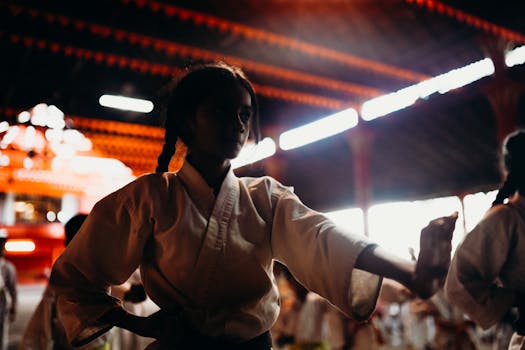
Image by cottonbro studio on Pexels
Symbolism
: The uniform serves as a visual representation of the practitioner's commitment to discipline, self-control, and mental toughness.Significance
: The uniform is an integral part of karate culture, promoting physical discipline, unity, and cohesion among practitioners.
In conclusion, karate uniforms are more than just a practical garment; they represent a significant aspect of karate culture. By understanding the history, symbolism, and significance behind traditional patterns in karate uniforms, we can gain a deeper appreciation for this martial art and its rich cultural heritage.
We hope that this article has provided a comprehensive and detailed exploration of the symbolism behind traditional patterns in karate uniforms. As always, we welcome your feedback and suggestions to improve our content.
For more information on karate uniforms and their significance, please visit our website at myKarateStore. We also encourage you to share your thoughts and experiences with us in the comments section below.