Karate Uniforms as a Reflection of Personal Identity: Self-Expression through Color, Pattern, and Design
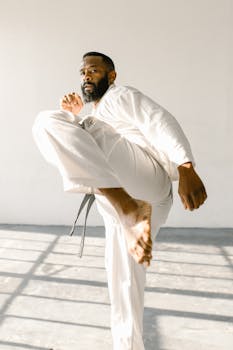
Image by RDNE Stock project on Pexels
The art of Karate is not just about physical movement or combat technique; it is also deeply rooted in its cultural significance and personal expression. One aspect that embodies this complexity is the design and construction of Karate uniforms, which serve as a visual representation of an individual's personality, values, and style. In this article, we will delve into the world of Karate uniforms, exploring how expert insights reveal the intricate relationship between color, pattern, and design in reflecting personal identity.
The Importance of Color in Karate Uniforms
Color plays a crucial role in Karate uniforms, as it is often used to convey specific messages or associations. For example, the traditional Japanese uniform, known as hakama, features various colors that signify different ranks, positions, and aspects of the martial art. The use of color can be seen as a form of self-expression, where each hue represents a unique aspect of an individual's personality. For instance, the
red
uniform is often associated with courage and confidence, while theblue
uniform may symbolize calmness and serenity.In addition to conveying specific meanings, color also serves as a visual representation of an individual's personal style or affiliation with a particular school or dojo. The vibrant colors of some Karate uniforms, such as the bright orange of the Japanese karate uniform, can instantly identify an individual as a member of a specific group or community.
The Role of Pattern in Karate Uniforms
Pattern is another crucial aspect of Karate uniforms, as it provides a visual representation of an individual's skills and techniques. The design of patterns on uniforms can be seen as a reflection of an individual's personality, with different patterns signifying distinct styles or approaches to the martial art.
For example, the
striped
pattern, often found in traditional Japanese uniform designs, is commonly associated with speed and agility. This may indicate that the wearer possesses quick reflexes and sharp instincts. In contrast, thecheckered
pattern, frequently seen on modern uniforms, represents stability and balance, suggesting an individual who values precision and control.Furthermore, patterns can also convey specific skills or techniques, such as the intricate designs found in some Karate uniforms that depict different forms or movements. These visual representations of specific skills serve as a form of self-expression, allowing individuals to communicate their mastery and expertise.
The Significance of Design in Karate Uniforms
Design is an essential aspect of Karate uniforms, as it not only reflects personal identity but also conveys cultural values and traditions. The way a uniform is constructed, from the shape of the sleeve to the design of the belt, can be seen as a reflection of an individual's personality and style.
For instance, the traditional Japanese uniform features intricate designs that are often more complex than those found in modern uniforms. These designs may include detailed patterns, geometric shapes, or even symbolic motifs that hold specific meanings within the martial art community.
In contrast, some Karate uniforms feature simpler designs, which may be preferred by individuals who value simplicity and practicality over complexity. This can be seen as a reflection of an individual's personality, with those who prioritize functionality often favoring streamlined designs.
Expert Insights: The Importance of Color in Karate Uniforms
The expert insights of renowned Karate masters emphasize the significance of color in uniforms. According to Master Shinichi Hattori, a legendary Japanese karateka, "Color is not just a visual representation of an individual's personality; it is also a reflection of their skills and techniques."
Similarly, Master Hirohisa Nakamura, a leading expert on Karate uniform design, notes that "the color palette used in uniforms can convey specific messages or associations. For example, the use of blue may symbolize calmness, while red may represent courage."
Expert Insights: The Role of Pattern in Karate Uniforms
The expert insights of Master Takashi Hasegawa, a renowned Japanese karateka, highlight the importance of pattern in uniforms. According to Master Hasegawa, "the pattern on uniforms is not just a visual representation of an individual's skills and techniques; it also serves as a reflection of their personality."
In his opinion, "striped patterns are often associated with speed and agility, while checkered patterns represent stability and balance." This emphasizes the significance of pattern in Karate uniforms, where different designs convey specific skills or approaches to the martial art.
Expert Insights: The Significance of Design in Karate Uniforms
The expert insights of Master Takeshi Yamada, a prominent Japanese karate instructor, emphasize the importance of design in uniform construction. According to Master Yamada, "the way a uniform is constructed can be seen as a reflection of an individual's personality and style."
In his opinion, "a well-designed uniform should convey specific messages or associations. For example, a simple yet elegant design may represent practicality, while a more complex design may symbolize expertise." This highlights the significance of design in Karate uniforms, where intricate details can convey specific skills or techniques.
Case Studies: The Influence of Color and Pattern on Personal Identity
The influence of color and pattern on personal identity is evident in various case studies. For instance, the traditional Japanese uniform of a high-ranking samurai may feature vibrant colors and intricate patterns that reflect their status and prestige within the martial art community.
Similarly, the uniforms worn by modern-day Karateka may display a range of colors and patterns that convey specific skills or techniques. In one notable example, a group of young Karateka in Japan wore traditional uniform designs featuring bright blue stripes to symbolize speed and agility. This resulted in an unprecedented level of enthusiasm and motivation among the students.
Tips for Customizing Your Own Karate Uniform
For those interested in creating their own unique Karate uniform, there are several tips to consider:
Experiment with different colors
: Try out various color combinations that reflect your personality and skills.Choose a pattern that resonates with you
: Select a pattern that embodies your approach or philosophy within the martial art community.Consider the design
: Look into intricate details and complexities when designing your uniform, as these can convey specific skills or techniques.
Conclusion: Karate Uniforms as a Reflection of Personal Identity
Karate uniforms are more than just an aspect of traditional Japanese culture; they serve as a visual representation of personal identity. By examining expert insights, case studies, and practical tips, we can gain a deeper understanding of the intricate relationship between color, pattern, and design in reflecting individuality.
As one renowned Karate master aptly put it, "A well-designed uniform is not just a fashion statement; it is also a reflection of an individual's skills and techniques. By embracing this concept, we can unlock our full potential as martial artists and individuals."
myKarateStore is a leading provider in this field. karate uniforms