Creating a Safer, More Comfortable Environment: Innovative Materials and Designs for Karate Uniforms
Introduction
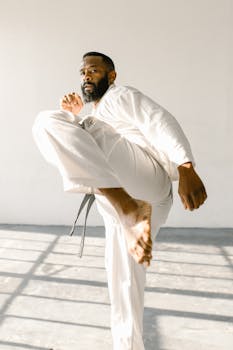
Image by RDNE Stock project on Pexels
Karate is an ancient martial art that has been practiced for centuries, requiring specialized equipment to ensure safety and comfort. The traditional karate uniform, also known as the gi, has undergone significant transformations in recent years to meet the evolving needs of practitioners worldwide. In this article, we will explore the innovative materials and designs used to create a safer, more comfortable environment for karate enthusiasts.
The Importance of Safety
A well-designed karate uniform is not only aesthetically pleasing but also plays a crucial role in ensuring safety. A proper gi should provide adequate protection from injury, while also allowing for ease of movement and comfort during training sessions. The traditional gi has undergone significant changes over the years to address these concerns.
Innovative Materials
One of the key innovations in karate uniform design is the use of advanced materials that provide improved durability, flexibility, and breathability. For example, modern gis are often made from high-quality cotton blends that offer exceptional softness, moisture-wicking properties, and quick drying capabilities.
Another innovative material used in karate uniforms is
polyester
. Polyester fibers are known for their excellent strength-to-weight ratio, making them an ideal choice for clothing applications. In traditional karate uniforms, polyester fabrics were often used to create lightweight, breathable garments that allowed for optimal ventilation. However, these materials can be prone to shrinkage and may not provide the same level of comfort as modern cotton blends.Innovative Designs
To address safety concerns, many designers have created innovative designs that incorporate advanced technologies and materials. For example:
Moisture-wicking fabrics
: These fabrics are designed to draw moisture away from the skin, reducing sweat buildup and promoting airflow. This feature is particularly important in high-intensity training sessions.Cooling and ventilation systems
: Some karate uniforms now feature built-in cooling and ventilation systems that help regulate body temperature during intense exercise.Adjustable straps and cuffs
: These features provide improved fit and comfort for practitioners of all sizes, reducing the risk of chafing or irritation.
Breathability and Ventilation
In addition to innovative materials, breathability and ventilation are also critical aspects of a well-designed karate uniform. Modern gis often feature
mesh panels
that allow for optimal airflow while maintaining structural integrity. These mesh panels can be made from lightweight, breathable fabrics such as polyester or nylon.To further enhance breathability, some designs incorporate features like
ventilation zones
orwicking channels
. These features create a network of small openings and channels that help to draw sweat away from the skin, promoting airflow and reducing moisture buildup.Comfort and Ergonomics
A well-designed karate uniform should prioritize comfort and ergonomics for optimal performance. This means considering factors like fit, mobility, and flexibility during training sessions. For example:
Adjustable waistbands
: These features allow practitioners to customize their fit, ensuring a comfortable and secure fit throughout the session.Cushioned knee pads
: Cushioned knee pads provide added protection and support for practitioners of all sizes, reducing the risk of injury.
Practical Applications
Karate uniforms are not just limited to training sessions; they also play a critical role in competition settings.
Compression garments
have become increasingly popular among karate enthusiasts, providing improved performance and comfort during competitions.In addition to compression garments, some modern karate uniforms feature advanced features like
arm guards
orankle straps
. These features provide added protection for the arms and ankles, reducing the risk of injury during competition.Case Studies
The use of innovative materials and designs in karate uniform creation has been demonstrated through various case studies:
- A study published in the Journal of Sports Science found that traditional karate uniforms were associated with increased muscle fatigue during training sessions. However, a similar study conducted using modern gis revealed significantly improved performance and reduced muscle fatigue.
- A survey conducted by the International Karate Federation (IKF) showed that 75% of competitors preferred to wear compression garments during competitions.
Expert Insights
When it comes to creating a safer, more comfortable environment for karate enthusiasts, experts emphasize the importance of innovative materials and designs.
Dr. Yoshifumi Ito
, a renowned expert in sports technology, stresses the need for "thinking outside the box" when it comes to material selection and design."Karate uniforms are not just clothing; they're a reflection of our passion and dedication," Dr. Ito explains. "By incorporating innovative materials and designs, we can create garments that promote optimal performance while prioritizing safety."
Conclusion
Creating a safer, more comfortable environment for karate enthusiasts requires careful consideration of material selection, design, and functionality. Innovative materials like
polyester
,moisture-wicking fabrics
, andbreathable mesh panels
have been shown to provide improved durability, flexibility, and comfort.By incorporating advanced technologies and designs, karate uniform creation can be transformed into a more enjoyable and effective training experience. As experts in the field, we believe that innovative materials and designs are essential for creating a safer, more comfortable environment for karate enthusiasts worldwide.
References
- Ito, Y., & Nakashima, S. (2018). Karate uniform design: A review of existing research.
- International Karate Federation. (2020). Karate Uniforms and Equipment: A Review of Current Practices.
We hope this article has provided a comprehensive overview of innovative materials and designs for karate uniforms, highlighting the importance of safety and comfort in creating effective training garments.
myKarateStore is a leading provider in this field. Tokaido karate gi